
 简体中文
简体中文Search for More Information


Dongguan Jiayi Intelligent Equipment Co., Ltd. is a one-stop linear motion system solution and manufacturer, specializing in the research and development, production, and sales of linear modules, linear motors, DD motors, variable pitch modules, electric sliding tables, multi axis precision platforms, platform customization, and module accessories such as rolling bead screws and linear guides. Enjoying a high status among consumers, the company has established long-term and stable cooperative relationships with multiple agents. We have been awarded the titles of National High tech Enterprise, Specialized and Innovative Enterprise, Large scale Industrial Enterprise, Dongguan Collaborative Doubling Enterprise, and 38 National Patent Technologies. In 2019, we passed the ISO9001 quality management system certification, with a factory area of 10000 square meters and more than 120 employees, including a senior R&D and design team of more than 20 people. We have American API and other precision testing instruments, and have established long-term strategic industrial cooperation relationships with multiple universities and research institutes. We insist on introducing and absorbing advanced automation technologies from Germany and Japan to improve our manufacturing process level. To ensure worry free transmission of intelligent equipment, our company's products are renowned for their stability and precision, creating higher value for customers.
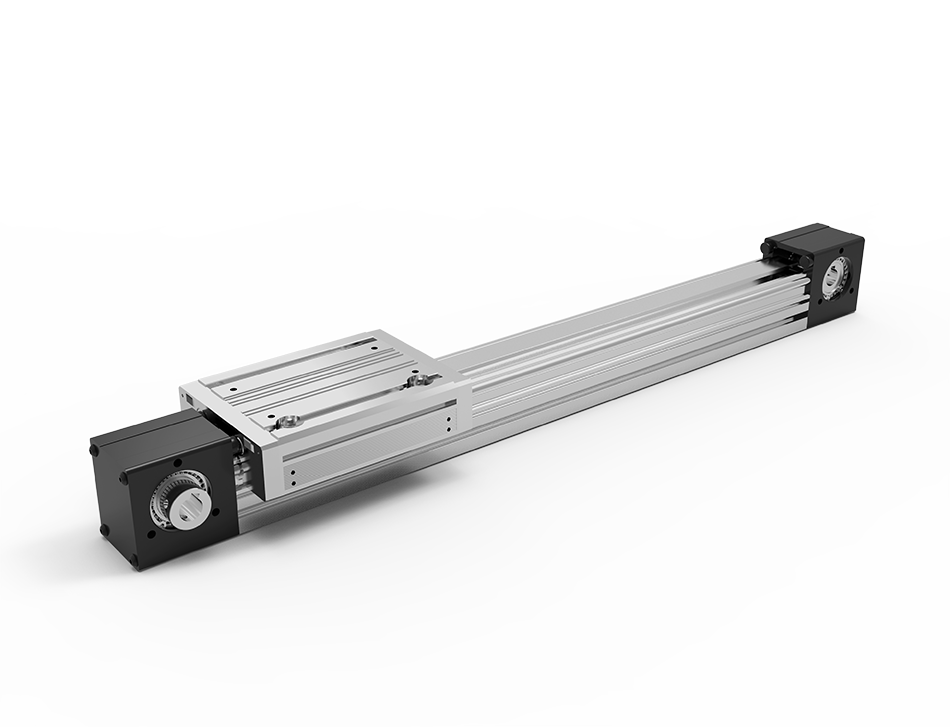
How to install servo motor for linear module turning interface
The process of installing servo motors at the turning interface of the linear module requires careful operation to ensure that the motor can operate stably and meet performance requirements. The following are detailed installation steps and precautions:
一、Pre-installation preparation
Confirm motor and module matching:
Before installation, confirm the compatibility between the module and servo motor with the manufacturer to ensure that the motor size, specifications, etc. meet the requirements of the module.
Check the installation platform:
The installation platform should have sufficient rigidity and stability to avoid module shaking and resonance during operation.
Ensure that the flatness of the installation platform's tabletop meets the requirements of the module to improve the positioning accuracy of the module.
Prepare tools:
Prepare the necessary installation tools, such as screwdrivers, wrenches, calipers, etc.
二、Installation steps
Align the turning interface:
Align the mounting flange holes of the servo motor with the turning interface of the linear module. Due to the fact that the turning interface may involve rotation in multiple directions, it is necessary to ensure alignment accuracy and avoid excessive errors.
Fixed motor:
Use appropriate screws to sequentially secure the motor flange mounting holes. When tightening screws, pay attention to moderate force to avoid over tightening or over loosening.
If the module is installed by side folding, please ensure that the two synchronous wheels are level and the alignment error cannot exceed 0.5mm.
Install the coupling:
If the servo motor needs to be connected to the module through a coupling, please ensure that the model and specifications of the coupling meet the requirements.
Tighten the fastening screws of the coupling to ensure a secure and reliable connection.
Install dust cover:
After confirming the correct connection between the motor and module, install a dust cover to protect the interface between the motor and module.
三、Debugging and Testing
Cable connection:
Connect the encoder cable, power cable, and control plug correctly according to the wiring diagram of the servo motor and driver.
System power on:
After ensuring that the wiring is correct and that there is no collision during the movement of the rotor, power on the driver for debugging.
Functional testing:
Test whether the motion function of the servo motor is normal through the operation panel or upper computer debugging software.
Observe whether the movement of the motor at the turning interface is smooth, without any jamming or abnormal noise.
Accuracy testing:
If necessary, the horizontal and vertical parallelism of the linear module can be measured to ensure that the accuracy of the module meets the requirements.
四、Precautions
Load control:
During installation and operation, it is important to ensure that the radial and axial loads applied to the servo motor shaft are controlled within the specified values for each model to avoid overloading and damaging the motor.
Cable protection:
During the installation process, attention should be paid to protecting the cables to avoid external bending forces or torque or vertical loads from their own weight. The cable should be installed in the groove along the side of the straight module to ensure its safety.
Avoid hitting the shaft end:
When installing or disassembling the servo motor shaft end, do not use a hammer to directly strike the shaft end to avoid damaging the encoder or causing other damages.
Lubrication and sealing:
If there are transmission components such as reduction gears between the module and the servo motor, ensure good lubrication and use seals such as oil seals to prevent oil leakage into the servo motor.
Safety precautions:
During the installation and debugging process, personal safety should be taken into account to avoid dangerous situations such as electric shock and pinch injuries.
In short, the installation of servo motors at the turning interface of linear modules requires careful operation and adherence to certain steps and precautions. By proper installation and debugging, it can be ensured that the servo motor runs stably on the linear module and meets performance requirements.

How to calculate the frictional force during the operation of linear bearings?
With the reform of industrial automation equipment technology, China has continuously upgraded and improved its manufacturing industry, greatly improving the overall production level and having important developmental significance for promoting the industrial economy. At present, we all know that the moving components of a machine tool include linear guides, linear bearings, screw rods and other transmission products, all of which are indispensable. So, in the actual operation process, how is the friction force of linear bearings calculated? Let's listen to how our Dongguan Jiayi technical engineers answer for you. If you don't understand, come and learn more!
At present, based on the application of linear bearings in machine tool equipment, we can see that the workload of linear bearings is very large. Regardless of the type of bearing, it cannot operate under overload conditions, which directly affects the machining accuracy of linear bearings and can seriously cause the failure of linear bearings, greatly reducing production efficiency and being extremely detrimental to enterprises.
Firstly, we need to measure the total friction of various types in linear bearings as the resistance that hinders the operation of the bearing. Usually, this resistance can be represented by the resistance torque, which is collectively referred to as the friction torque of the bearing on linear bearings. Friction torque has the characteristics of multiple factors and randomness. The friction torque of bearings also varies under the same conditions of use. The torque required for a general linear bearing to start rotating from a stationary state is called the starting friction torque. However, the friction torque that rotates at a certain speed after startup is called rotational friction torque, which is usually used to represent the average friction torque and maximum friction torque.
According to the different usage requirements of linear bearings, the requirements for friction torque will also vary. In general, for bearings that operate continuously, the smaller the average friction torque required, the better. However, for bearings that start frequently or have requirements for forward and reverse rotation, the starting friction torque should be smaller. For instruments and instrument bearings with high sensitivity requirements, the maximum friction torque should be small and stable. From the above, we can summarize that there are two methods for calculating friction torque: approximate calculation and more accurate calculation.