
 简体中文
简体中文Search for More Information

When facing screw modules, many questions arise, such as choosing the appropriate screw size, determining the width of the base, and matching the motor.
To understand these things, we need to first understand the structural characteristics of the screw module:
The main components of the screw rod linear module include: ball screw, linear guide rail, aluminum alloy profile, screw rod support base, coupling, motor, electromagnetic switch, etc
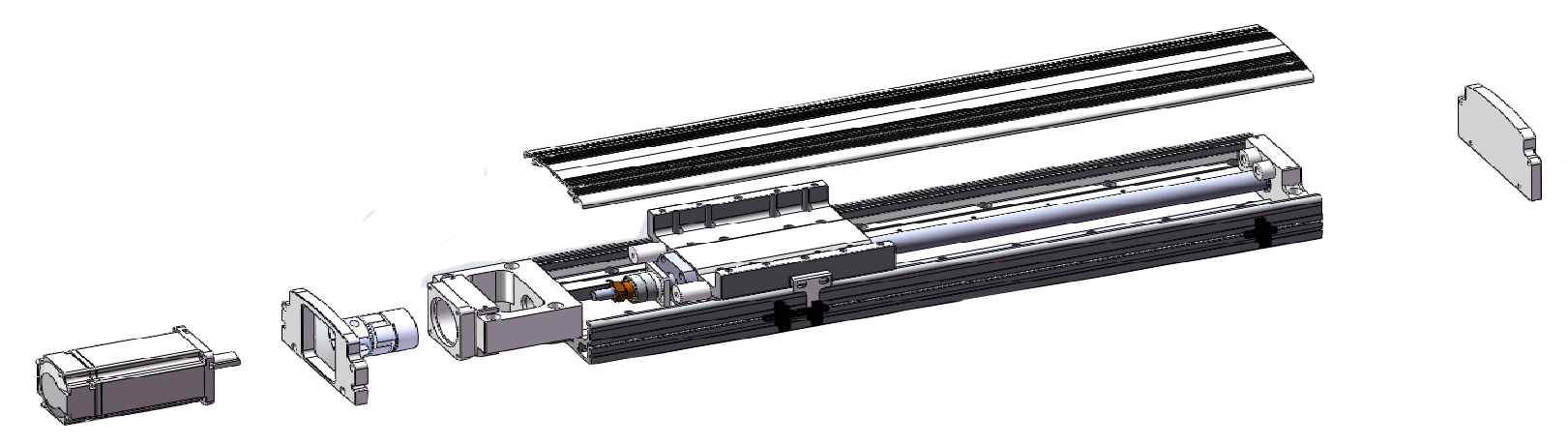
1. Ball screws are ideal products for converting rotary motion into linear motion, or vice versa.
2. Linear guide rails, also known as slide rails, linear guides, or linear slide rails, are used in linear reciprocating motion applications. They have a higher rated load than linear bearings and can also withstand a certain amount of torque, enabling high-precision linear motion under high loads.
3. Aluminum alloy profiles boast an aesthetic appearance, reasonable design, good rigidity, and reliable performance, making them ideal basic power components for modular machine tools and automatic lines. They exhibit excellent dynamic performance, high rigidity of the slide table, minimal thermal deformation, and high feed stability, thus ensuring the actual accuracy under processing conditions (under load).
4. The support base for the screw rod utilizes an ultra-small angular contact ball bearing with high rigidity and precision, ensuring stable rotational performance. The internal bearing using deep groove ball bearings is filled with an appropriate amount of lithium soap-based grease and sealed with a special sealing washer, allowing for direct installation and long-term use.
5. The servo motor enables the sliding table to advance and retract quickly. By utilizing ball screws and linear rails, high precision is achieved. The linear sliding table can be controlled either through PLC or directly through the robot control system. The motion speed and trajectory of the linear sliding table can be programmed and set to meet various application requirements.